Sunday, November 10, 2019

Capitalism Always Wins.


The Socialist policies inspiring Democratic hopefuls are proof that capitalism flourishes—even in the most desolate, Socialist corners of the world.   

The policy proposals coming out of the Democratic primaries hearken back to the utopian mantra of socialism: the needs of individuals can be determined and fulfilled by society at large.
In the heart of the socialist world, life is sustained not by the paternalistic state but by pure, unfettered capitalism.
Democratic hopeful Elizabeth Warren recently argued that Americans have a “social contract” that obliges them to take a “hunk” of our hard-earned wealth and “pay forward for the next kid who comes along.”
And of course, who can forget the Democratic Socialist poster child, Bernie Sanders? Sanders went as far as to revel in Chinese breadlines that were borne of destitute poverty: “It’s funny, sometimes American journalists talk about how bad a country is because people are lining up for food. That is a good thing! In other countries, people don’t line up for food. The rich get the food and the poor starve to death.”
Much of the Democrats’ ideologies echo those of Hugo Chavez—one of the most notorious Socialists of contemporary times. Chavez’s policies created a modern nation full of “millionaires”; indeed, the Venezuelan Bolivar is so heavily inflated, the government had to hack a few zeroes off to control their “immense wealth.”
Meanwhile, Venezuelans are leaving the country in droves, armed with accounts from the supposed utopian life they are fleeing. What the rest of the world is coming to learn from these harrowing experiences of centralized, universal policies is that capitalism finds a way.
In the heart of the socialist world, life is sustained not by the paternalistic state but by pure, unfettered capitalism.
Oil Fields in Venezuela
Oil fields.
OIL FOR SOCIALISM: THE TRUE FOUNDATIONS OF THE BOLIVARIAN REVOLUTION
Elected in 1998, Hugo Chavez implemented his grand socialist vision in 2000 through anti-poverty initiatives called the “Bolivarian Missions.” Chavez sought to provide educational services, free health clinics, and other forms of state-funded support.
Year after year, under Chavez’s socialist regime, the national reserves depleted, and Venezuelans began to starve.
What started out as small-scale endeavors quickly snowballed into dozens of unilaterally implemented government-run social programs, ranging from universal healthcare to education and culture programming. Chavez bypassed the legislature, putting in place policies that effectively established complete societal control—and he used the country’s vast natural resources to fund his scheme.
As global oil prices steadily increased during the early aughts, reaching over $30 a barrel in 2003, Venezuela, which has the largest oil reserves in the world, became one of the wealthiest nations in the world. Chavez took full advantage of this. Venezuelan’s robust oil industry, which had been nationalized in the mid-1970s, became the fuel for his “utopian dream.” In 2002, using a general strike as a justification, Chavez swiftly replaced 19,000 employees of state-owned natural gas and oil companies with new employees loyal to his regime.
Starting in 2006, under the pretense of wealth redistribution, Chavez nationalized other key industries, such as cement, communications, electricity, steel, and several sectors of food production. In other words, all of the essentials a modern society needs.
Unfortunately, with complete governmental control over society, Venezuelan imports began to decline at an annualized rate of -22% from 2012 to 2017. It wasn’t long before the stockpiles started to shrink. Year after year, under Chavez’s socialist regime, the national reserves depleted, and Venezuelans began to starve.
Empty shelves in a Venezuelan grocery
Empty shelves in a Venezuelan grocery.
THIS IS WHAT A SOCIALIST “UTOPIA” LOOKS LIKE
In 2019, with a food shortage dramatically effecting the entire country, the government is trying hard to maintain its ideological narrative, enacting campaigns to encourage local communities grow their own food. This has done little: nothing has been done to solve the issue of mass starvation.
Both the variety and quality of the food distributed continuously decrease. The milk is questionable—at the best of times.
As the Venezuelan state grew closer to its ideological comrade, China, they took a page out of the Red State’s book. In 2018, the state introduced the Fatherland ID, a new citizen card that uses QR codes to enact tighter surveillance and control over the population. Not only does it contain all personal information about the cardholder, but it is also now the system through which welfare checks and distributions are handed out.
For those who can afford to purchase goods, each citizen is assigned an ID number which determines the day of the week that they can shop for groceries. The idea is to give stores a chance to resupply, but production is so low that supplies remain scarce. Certain items are prescribed price freezes by the state, but there are tight restrictions on the quantity of food that can be accessed with your ID card, which makes flexibility impossible when a family’s need fluctuates.
For the destitute, food distributions come in the form of ‘CLAP’ boxes, crates of food that are passed out in an attempt to satisfy local supply and demand. Both the variety and quality of the food distributed continuously decrease. The milk is questionable—at the best of times.
The breadlines are also very real. From toilet paper to food, acquiring any basic necessity requires waiting in line for hours, just for a single item. And when you finally get to the front of that line, there is no guarantee that what you lined up for will be there waiting for you.
Creative use of the Venezuelan Bolivar
Creative use of the worthless Venezuelan Bolivar.
BLACK MARKET CAPITALISM
‘Black markets’ carry a negative connotation due to their association with illegal goods. But, by definition, every transaction which is not documented and processed by the socialist government is illegal. The bolivar Venezuela had a 1,698,488% inflation rate in 2018, which led to farmers bypassing the government and going to the cities to sell or barter directly with consumers. To bypass governmental choke-hold on economic transactions, black markets have become a daily part of Venezuelans’ lives.
“With a malfunctioning public system that’s broken and corrupt to its core … people have come up with unique and elaborate ways to establish a parallel black market of its own.”
I spoke with Kaleb Caruso, a Venezuelan dissident, about the black market economy. Caruso said that “with a malfunctioning public system that’s broken and corrupt to its core … people have come up with unique and elaborate ways to establish a parallel black market of its own.”
Venezuela’s black market has two primary sources of goods: theft and exchange through unsanctioned markets.
Even as foreign imports continue to shrink, the costly private courier services that bring in life-saving medication and highly desired goods are subject to frequent pillaging. What is lost in transit is often thought of as ‘a service fee.’
Communities have organized distribution systems that bypass the state to receive supplies. These logistics networks often feature foreigners residing in Venezuela. Although the transactions are not sanctioned by their home states, foreign embassies and consulates play a considerable role in helping keep the influx of foreign imports alive.
Consumers and black market proprietors connect through social media. Using services like Facebook, a direct message to the right person can give you access to hard-to-find goods.
Because it is not subject to state scrutiny, prices are unregulated. This isn’t to say that products come cheap; there is a price to pay for subverting the ultra-authoritarian state. But what it does mean is that almost anything can be found that can’t be obtained through state-sanctioned means.
In other words, the only thing keeping Venezuela going is pure capitalism.
Venezuelan Protests
Venezuelan protests in 2017.
HUMANITARIAN CRISIS IN SOCIALIST UTOPIAS
“The government has had a love-hate relationship with the black market. It has cracked down hard at times, but at the same time, it’s left alone because it helps alleviate the state’s own deficiencies and mishandling of the economy, the latter being a normal part of their relationship nowadays,” says Caruso.
Democratic hopefuls want to design their policies around Socialism—but pay little mind to the human suffering these policies can and have enacted worldwide.
Caruso has been documenting the value of the Bolivar and reporting on currency fluctuations from inside Venezuela. In 2017, he was featured in Fortune Magazine, where he broke the story on World of Warcraft in-game currency being worth more than the Bolivar, and Venezuelan efforts to earn a livable wage playing video games. Caruso frequently condemns the war of attrition the state is waging against its citizens. People are dying from the food and medicine shortages induced by poor central planning.
“A former colleague of my mother had to steal human serum albumin from a cold storage, concealing it in her purse and hoping that the National Guard soldiers wouldn’t ask questions.” Kaleb recalls, as his mother, who was one of Venezuela’s experts on pain and palliative care, suffered a long and grueling battle with cancer and passed away in 2018.
“Yes, it was a felony … but when your loved ones are suffering and you feel powerless to act, when you turn on the television and see the Socialist regime insist that everything is a lie and that there is no health crisis in spite of what you’ve seen and gone through over the years, that’s when you suspend your moral beliefs, your social inhibitions, and you become empowered by despair to do anything and everything so that maybe, the person you admire and love the most gets to smile once more.”
Democratic hopefuls want to design their policies around Socialism—but pay little mind to the human suffering these policies can and have enacted worldwide. And if the example of Venezuela shows us anything, it’s that capitalism, no matter the extent to which it is suffocated by central planning, finds a way.

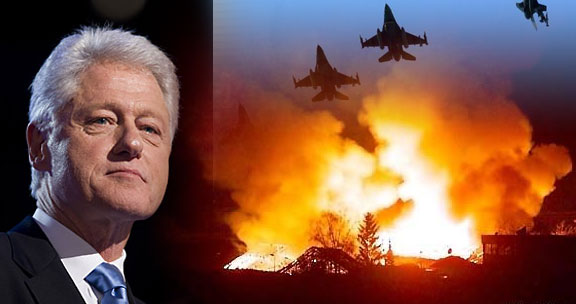
Democrats Oppose Syria Pullout, Where Were They During Obama’s Iraq Pullout? And Bill Clinton’s War Yugoslav


Image result for bill clinton war


More civilians--Kosovar refugees, at that--have been killed by allied air strikes. NATO has destroyed China's embassy in Belgrade, dropped cluster bombs on a Serb market,shredded relations with Russia, blasted the Yugoslav economy intorubble, triggered escalating violence against Kosovars, anddestabilized all of Southeast Europe.
Yet allied attacks continue. Not just continue, butintensify.
Bill Clinton's war has proved to be one of America'sgreatest foreign policy debacles. What does the President do?Hire Leslie Dash, vice chairman of Edelman Public RelationsWorldwide, to advise the administration on Kosovo. PresidentClinton should end the war instead.
The President launched an unprovoked war of aggressionagainst a small, distant state. He cynically wrapped hiscampaign in humanitarianism while ignoring worse slaughterselsewhere. He arrogantly assumed that foreign leaders wouldgenuflect before him. He attacked their nation when they didn't.
How does Bill Clinton justify his war? In a recent speechat National Defense University President Clinton likened eventsin Kosovo to those in Nazi Germany: a "vicious, premeditated,systematic oppression fueled by religious and ethnic hatred."
This is pure cant. The administration has nothing against"vicious, premeditated, systematic oppression" if committed byallies, like Croatia and Turkey. Or if perpetrated against blackAfricans.
Moreover, as ugly as was the Kosovo conflict, it was no NaziHolocaust, but a minor civil war, with casualties a fraction ofthose occurring in such places as Kashmir and Sri Lanka. Wherereal genocide results, like Rwanda, President Clinton studiouslyaverts his gaze.
Once it became clear that the administration intended toeffectively strip Yugoslavia of Kosovo, however, Belgradeunsurprisingly lashed out. Indeed, allied bombing turned allKosovars--whose leaders publicly lobbied for NATO intervention--into enemies of the Serbs.
Yugoslavia wasn't gentle before being bombed. It certainlywasn't going to be gentle afterwards. The number of refugees inAlbania and Macedonia jumped from 45,000 to 640,000.
At the same time, the allied war quickly turned into a waron Serb civilians, with strikes on everything from bridges toelectrical plants to television stations. The only way NATO cancontinually intensify the bombing is to widen its target list.And that means more dead civilians.
Accidents may be unavoidable, but they are least justifiablein a supposedly humanitarian war. How many Yugoslavs deserve todie to enable Kosovar refugees to go home? Ethnic cleansing isugly; premeditated murder is worse.
Of course, Bill Clinton argued in his speech that reducingYugoslavia to ruins "is the right thing for our securityinterests over the long run." But he can't really believe that.
The conflict in Kosovo, though messy, was contained untilNATO began bombing. The Serbs were attempting to hold onto whatthey had, not expand. Yugoslavia's earlier civil war did notexplode Europe because none of the major powers intervened.
But the administration's maladroit attempt to impose asolution unwanted by either side sparked Belgrade's crackdown,followed by mass refugee flows that destabilized Serbia's fragileneighbors. The war has immeasurably strengthened the KosovoLiberation Army, which has expansionistic dreams--to uniteAlbanians throughout the region--vis-a-vis Kosovo's more moderatepolitical leadership.
The NATO countries are fast dividing as they confrontRussia, itself sliding towards political chaos. Bill Clinton hasspilled gasoline across Europe.
Continued bombing guarantees only continued killing,instability, and failure. Kosovars will suffer and Serbs willdie for nothing.
Inaugurating a ground war, and following it with a long-termoccupation (Republican presidential candidate Lamar Alexanderspeaks of "three-to-five decades of patrol") would be far worse.If the Europeans want to turn Kosovo into a protectorate andoccupy Belgrade, let them. They have a million men under arms.
The U.S. should stop bombing. Today.
Forget about concerns over credibility. Credibility, likepatriotism, is the last refugee of the scoundrel. NATO'scredibility is already in tatters. Maintaining, nay,intensifying a manifestly failed policy will rend what little isleft.
Instead, Washington should propose negotiations whereregional proposals, rather than U.S. dictates, are presented.Discussions need to be led by a country that hasn't warredagainst Serbia; Russia must participate.
The goals are basic: return of refugees, protection ofKosovars, presence of Western monitors, end of the guerrilla war,and political autonomy for Kosovo.
None of these will be easy to obtain. Thanks to NATO thealready deep hatreds in Kosovo have been intensified beyondimagination.
But there is no alternative. It should be tragicallyobvious by now that Washington cannot impose peace.
The President does have a PR problem with his war. But theproblem is the war. The solution is not to hire another mediaflack. It is to end the war.https://www.cato.org/publications/commentary/end-bill-clintons-war

Tuesday, November 5, 2019

Vladimir Putin: How a spy rose to power and held on to it

Vladimir Putin has used a system of misinformation and cronyism to stay in power for decades. DW takes a look at how an obscure low-level spy became an unbeatable leader.

Vladimir Putin in a KGB uniform


iving him another six years in office. The political victory caps off a career spent accumulating power, evading consequences for legally questionable activities and changing Russia's image for the world and for itself.
After completing his law degree in 1975, Putin famously started his career at the KGB, the Soviet secret police force. He was posted to Dresden, East Germany, where he posed as a translator.
Although much has been made of his spy career, including sly allusions from Putin himself, his biographer Masha Gessen has written that his time in Germany was "reduced mainly to collecting press clippings, thus contributing to the mountains of useless information produced by the KGB."
After the fall of the Berlin Wall, Putin returned to his home of St. Petersburg. He would continue to rise through the ranks of Russia's political establishment non-stop from there.
In 1990, in his very first year working for St. Petersburg city hall, city councillors discovered that Putin had permitted the sale of highly undervalued steel in exchange for foreign food aid that never arrived. Despite an investigative committee recommending his ouster, Putin remained in his position until 1996, having already formed a close friendship with Mayor Anatoly Sobchak.
Friends in high places
Throughout the following years, Putin used his network of political friendships to make his way up the ladder. In 1997, then-President Boris Yeltsin named Putin his deputy chief of staff, and a year later he was made the chief of the FSB, the post-Soviet successor to the KGB.
Shortly thereafter, Yeltsin appointed Putin to be his prime minister. Putin managed to take this post despite both Yeltsin's rivals and loyalists trying to take him down, as they all jockeyed to put themselves in position to succeed the ailing president.
When Yeltsin unexpectedly resigned in 1999, Putin became acting president. One of his very first acts was to pardon Yeltsin of corruption, before setting his sights on being elected outright.
In March 2000, Putin steamrolled past the other two contenders to become president with 53 percent of the vote. One important factor in Putin's victory was image. Unlike many of Yeltsin's other would-be successors, Putin had taken an unrelenting position in support of the Second Chechen War. This made him appear like a strong law-and-order candidate — a welcome relief after years of chaos.
Consolidating power
Putin's success was not only because of his own image but because of how he changed Russia's image of itself. The fall of the Soviet Union and the administration of the often drunk, sickly Yeltsin were both deeply embarrassing. That Putin managed to bring his country out of the economic ashes into a period of boom time during his first administration also helped solidify his popularity.
Barred from running for a third consecutive term in 2008, Putin became prime minister to President Dmitry Medvedev. During that administration, the presidential term was extended from four years to six, to take effect at the next election. In 2012, Putin became president once again and named Medvedev his premier, prompting allegations of a tandemocracy.
'A mafia state'
According to Russian-American author Masha Gessen, Putin's ability to so easily wield power at home is derived not only from a carefully crafted image: The former spy has remained in the Kremlin despite a declining economy, diplomatic isolation and nearly continuous allegations of corruption and human rights abuses because of his ability to "have words mean nothing."
"He just keeps talking … It's meant to create the impression that he knows what he's talking about. But it's also just meant to drown you in meaningless stuff."
Speaking with the Atlantic, Gessen added that Putin's desire to build a mafia-style government on the ruins of a totalitarian regime had left Russia "a mafia state and a totalitarian society."
Gessen also takes issue with the West's idea of Putin as a "Bond villain mastermind of global chaos," but does argue that this very perception has worked in the president's favor.
And the Putin political machine shows no signs of slowing down. Having set up a complex web of political and economic cronyism, the end of Putin would also spell the end of stability in Russia. But with his victory on Sunday, Vladimir Putin will remain in power until at least 2024.

DW RECOMMENDS

AUDIOS AND VIDEOS ON THE TOPIC

Sunday, October 13, 2019

The Lie's Of Joe Bide And Obama Lied About Care, The Nine Lies of Obamacare.

The Affordable Care Act has been under relentless attack for the past nine years — I will not stand for it. As president, I will protect and build on the ACA to ensure every American has peace of mind when it comes to their health care. 


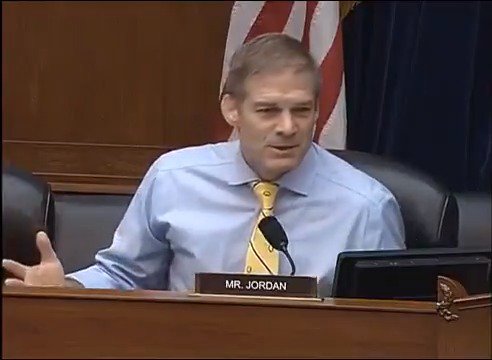
On Wednesday, Congressman Jim Jordan (R-Ohio) responded to a Democrat hearing called “The Trump Administration’s Attack on the ACA,” during which he recounted what he called the “Nine Lies of Obamacare”
“How can you undermine something that’s already failed,” Rep. Jordan asked. Which is exactly the right question that needs to be asked. I’ve laid out Jordan’s nine lies of Obamacare below, and actually combined a few and added some of my own.

1. If you like your doctor you can keep your doctor. If you like your plan, you can keep it.

As Barack Obama tried to sell Obamacare to the American people, there were lots of Americans who were happy enough with their health insurance that the idea of a big change was unsettling. To mollify these concerns, Obama repeatedly and unequivocally claimed that if you already had health insurance then nothing would change for you. “First of all, if you've got health insurance, you like your doctor, you like your plan -- you can keep your doctor, you can keep your plan. Nobody is talking about taking that away from you.”
This wasn’t something he said only once, he repeatedly made this argument:
Of course the claim was a total lie. CNN fact-checked the specific claim about being able to keep your doctor and their verdict came back “False.”
As for whether you could keep your plan, this lie was so egregious that the left-wing fact-checking site PolitiFact called "If you like your health care plan, you can keep it" their 2013 Lie of the Year.

2. Premiums would go down on average $2,500

His specific language varied on the stump, but Obama promised that his health care plan would reduce premiums “up to $2,500 a year per family” or “an average of $2,500 a year per family.”
Whichever version you want to go by, it was still a big fat lie.
According to a report from the Department of Health and Human Services, “In 2013, the average annual cost of a premium for an individual health care plan was $2,784. By 2017, the average annual cost for a premium for an individual health care plan on HealthCare.gov was $5,712. Thirty-nine states use HealthCare.gov.” In 24 states, premiums doubled, and three states had premiums triple over four years.

3. Deductibles would go down

Obamacare didn’t just make it harder for Americans to afford insurance coverage, but if you actually used your insurance, it would cost you more, as deductibles skyrocketed as a result of the law. CNBC reported in October 2016 that “Deductibles for individuals enrolled in the lowest-priced Obamacare health plans will average more than $6,000 in 2017, the first time that threshold has been cracked in the three years that Affordable Care Act marketplaces have been in business, a new analysis finds.” According to the study, families enrolled in bronze plans (the cheapest plans) would have an average deductible of $12,393.”

4. Healthcare.gov would work and be secure
Who can forget the failed launch of Healthcare.gov, the enormously expensive insurance exchange website created under Obamacare? When Obamacare officially launched on October 1, 2013, millions of Americans who had received notices they had lost the healthcare plans they’d been promised they could keep, flocked to the website to shop for a new healthcare plan. Well, at least they tried. There were software problems and massive system failures. Only six people managed to successfully sign up for Obamacare on launch day, and less than half of one percent of visitors to Healthcare.gov were able to enroll in the first week.
Not only did the site not work when it was supposed to, it was also terribly insecure. Security experts warned about the site’s vulnerabilities in 2013, but the Obama administration did not fix the problems. In January 2014, a hacker was able to access 70,000 records in four minutes.

5. Co-ops were wonderful. 

An obscure provision in Obamacare allocated $2.4 billion in taxpayer-funded, tax-free loans to establish twenty-three Obamacare co-ops nationwide to compete with private health insurance providers. The Obama administration approved each loan, but if you think the administration responsible for Solyndra did any better in establishing healthcare co-ops, you were wrong. By January 2018, only four Obamacare co-ops remained in business.

6. Not a tax, it is a tax.

A key feature of Obamacare was the individual mandate. If you didn’t buy health insurance you had to pay a penalty for that right. Barack Obama insisted, however, that this mandate was not a tax. “For us to say that you've got to take a responsibility to get health insurance is absolutely not a tax increase,” Obama told George Stephanopoulos in September 2009. Well, according to the Supreme Court, it was, and its alleged constitutionality was based entirely upon it being a tax.

7. It would be transparent.

When you talk about a government takeover of healthcare, you will make all sorts of promises to put people’s minds at ease about such big changes. The size and diversity of the country merited a judicious process that was both transparent and unrushed. Obama promised such a process, even pledging to broadcast the final negotiations live on C-SPAN. Well, he didn’t. Democrats were intent on fast-tracking Obamacare and negotiations were held in secret behind closed doors, and much of Obamacare was written after the legislation was passed and signed via regulations without the consent of Congress.

8. It wouldn’t fund abortions. 


When Obamacare was passed, Democrats had large majorities in both Houses of Congress… but getting everyone on board was a challenge. The last holdout after a number of corrupt deals were made was the small coalition of pro-life Democrats, led by former congressman Bart Stupak. His coalition would not support Obamacare while it contained language allowing for taxpayer-funded abortion medications under the law. Stupak negotiated with Obama, and Obama promisedto issue an executive order that would effectively ban public funding of abortions in Obama’s healthcare law. Without this compromise, Obamacare would have never passed the House of Representatives. When it came time for Obama to deliver on his promise, he didn’t. Final regulations for Obamacare actually requiredcoverage of abortion-inducing medications. Bart Stupak was understandably furious: “I am perplexed and disappointed that, having negotiated the Executive Order with the president, not only does the HHS mandate violate the Executive Order but it also violates statutory law.” He should have known better than to trust Obama.

9. Obamacare worked.


Obamacare proponents typically point to enrollment figures as proof that Obamacare worked. While it’s easy to understand that when you require people to buy health insurance the number of people enrolled in a plan will go up. But, as I’ve already noted, premiums and deductibles went up, so the fundamental question isn’t “did more people get covered?” it’s “did more people get access to affordable care?” The short answer is no. People are paying higher premiums and higher deductibles, which actually made healthcare less accessible to Americans.
According to a December 2018 Gallup survey, nearly a third of Americans (29 percent) delay health care decisions over costs. This number “is consistent with the rate seen each year since 2005 but is up from an average 24% in the four years prior to that -- from 2001-2004 -- and from 22% in 1991.” In other words, the number of people who can’t afford medical care was lower before Obama and the passage of Obamacare than after. If Obamacare didn’t decrease the number of people putting off healthcare over cost concerns, then what was the point of it? Clearly, Obamacare did not work as it was promised.
_____
Matt Margolis is the author of the bestselling book The Worst President in History: The Legacy of Barack Obama. His new book, Trumping Obama: How President Trump Saved Us From Barack Obama's Legacy, will be published on July 30, 2019. You can follow Matt on Twitter @MattMargolishttps://pjmedia.com/trending/jim-jordans-nine-lies-of-obamacare/